Week 8 — Elements 3–4
Use game-engine software and development tools
Using the engine as a production tool
Why this element matters
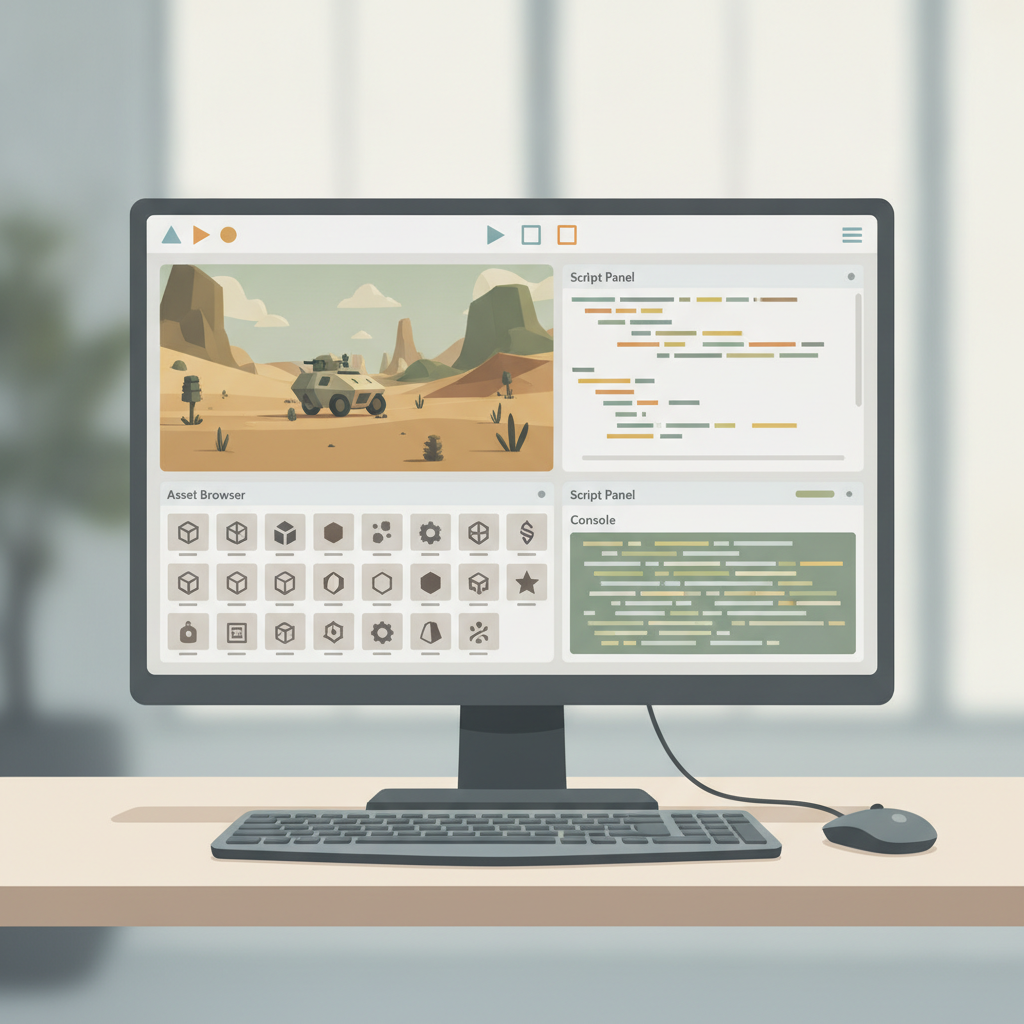
In a 3-D game project, the game engine is where design intent becomes a working, testable experience. Concept art, models, audio, interface ideas and written mechanics do not prove themselves until they are combined in-engine with scripts, collisions, input, camera behaviour, animation, triggers and game rules.
At Diploma level, you are expected to work beyond following a tutorial. You need to interpret a brief, make technical choices, use the engine’s tools, identify constraints, and check that your prototype is suitable for review by a client, teacher, producer, lead designer or other stakeholder.
This element covers three linked workplace activities:
- Creating, modifying or accessing scripts or code and combining assets so that the project contains working game objects, not just separate files.
- Creating and checking gameplay elements against creative and technical requirements, such as player movement, hazards, collectibles, UI feedback, scoring, progression or interaction.
- Testing and running a prototype as a presentation, confirming that the sequence of play communicates the intended experience and works within production and platform constraints.
You may use Unity, Unreal Engine, Godot or another approved industry-standard engine. The exact menus differ, but the production thinking is consistent: manage assets, use appropriate scripting or visual scripting, build reusable components, test early, document issues, and present a controlled prototype.
In an Australian workplace or training studio, this work also sits within professional obligations. You must use licensed software and properly sourced assets, respect copyright under Australian law, work safely at a computer workstation, protect project files, and communicate clearly through version control, naming conventions and issue tracking. A strong prototype is not just something that runs; it is something the team can understand, test, maintain and evaluate.