Week 6 — Elements 2–3
Prepare required assets for a game
Why this element matters
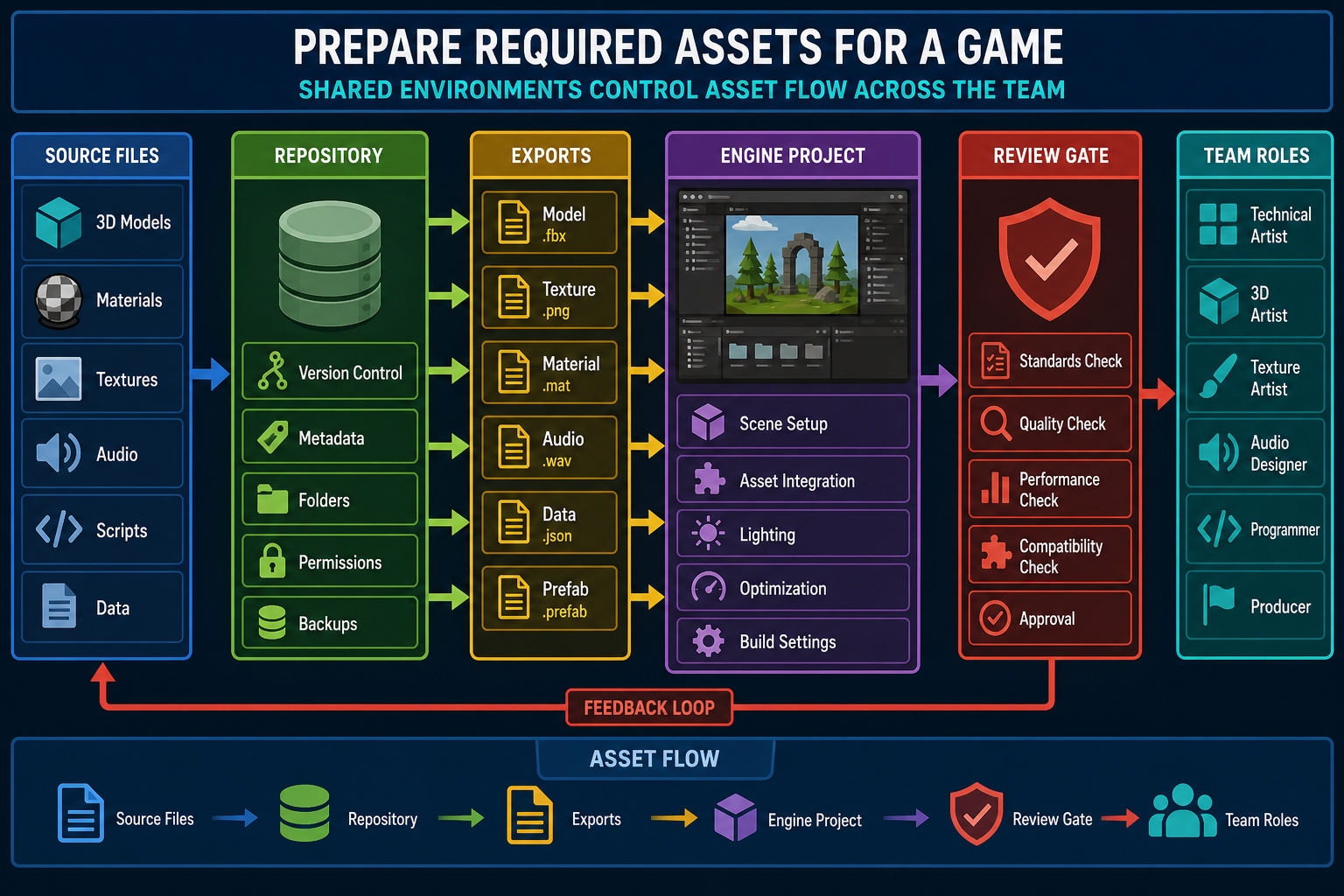
In a complex 3-D interactive game, assets are not just “art files”. They are production items that must be shared, tracked, imported, configured, tested and maintained. A character mesh, texture set, animation, prop, UI icon or environment module can affect frame rate, memory use, collision, gameplay scripting, build size, accessibility and the legal right to release the game.
At Diploma level, you are expected to work beyond simple file handling. You need to make practical decisions about pipelines, version control, asset attributes, engine constraints, licensing, risk and production scheduling. If the team’s assets are poorly organised, developers waste time finding files, re-importing work, fixing broken materials and resolving overwrite conflicts. If assets are created or purchased without checking engine requirements, the project can miss milestones or fail performance targets.
What you will learn
This element teaches you how to:
- establish a project environment that supports team sharing of assets
- review the attributes required for game assets in relation to the chosen game engine
- create or acquire visual assets in a legally and technically suitable way
- customise asset attributes to match the game design and engine pipeline.
These skills connect directly to the wider unit, ICTGAM533 — Create complex 3-D interactive games, because complex games depend on reliable integration between design intent, art production, technical implementation and testing. Whether you use Unreal Engine, Unity or another industry-standard engine, your asset preparation process must support collaboration, performance and repeatable builds.