Week 1 — Elements 1–4
4.1 Select appropriate form
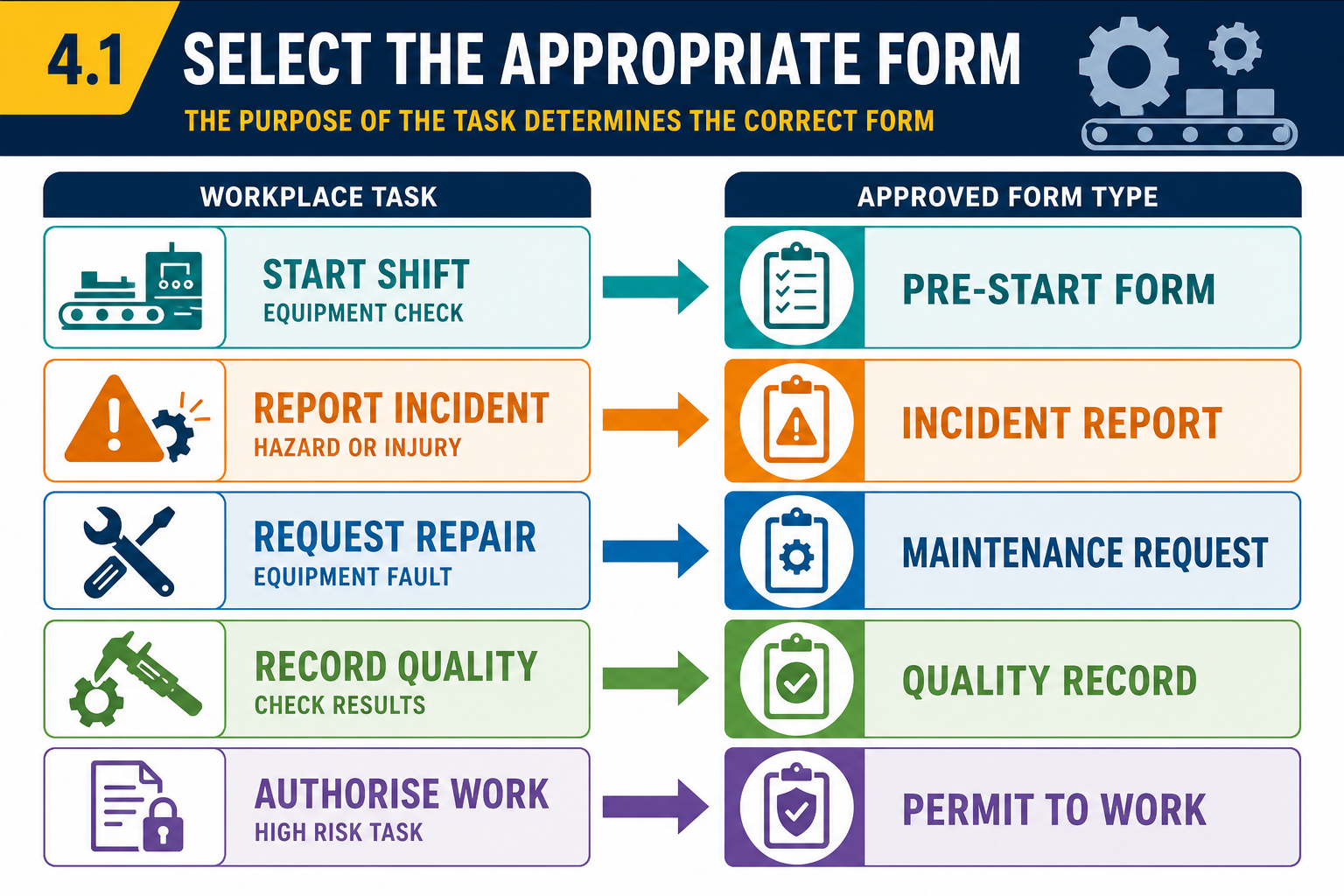
Selecting the right form
The first step is to identify what workplace event or task must be recorded. Different forms have different purposes. Common processing plant examples include pre-start checklists, job safety analyses or risk assessments, isolation or permit forms, maintenance requests, incident and near-miss reports, quality check sheets, batch records, shift handover sheets, visitor registers, leave forms and training records.
Use the form named in the organisation procedure, not a similar one you found in a drawer or old folder. Many sites control documents with a form number, version number, issue date or electronic template. A current approved form helps make sure the right information is collected, the right person signs it, and the record can be audited later.
A practical way to select the correct form is:
- Define the purpose: What happened, what is being checked, or what approval is needed?
- Check the procedure: Look in the site document system, noticeboard, intranet, work instruction, permit board or training material.
- Use workplace codes and signs: Equipment numbers, area codes, hazard symbols, colour coding and safety signs help match the form to the correct plant item or activity.
- Confirm if unsure: Ask a supervisor, leading hand, permit issuer, maintenance planner or quality technician before starting.
For example, if a pump is making an unusual noise, you do not complete an incident report unless there was injury, damage, spill or near miss. You would usually raise a maintenance request and may also record the issue in a shift log or pre-start checklist. If the pump needs to be isolated for work, a separate isolation or permit process may apply.
Be careful with similar-looking forms. A quality non-conformance report is not the same as a maintenance defect report. A hazard report is not the same as an injury report. Using the wrong form can delay action, hide risk or create a poor evidence trail.
Australian workplaces commonly use safety signage and colour conventions, including red for prohibition or fire-related information, yellow for warnings, blue for mandatory actions, and green for emergency or safe-condition information. Do not rely on colour alone; read the wording and symbols, and follow site procedure. WHS duties require workers to follow reasonable safety instructions and report hazards as required by the workplace.