Week 1 — Elements 1–4
2.2 Take appropriate action
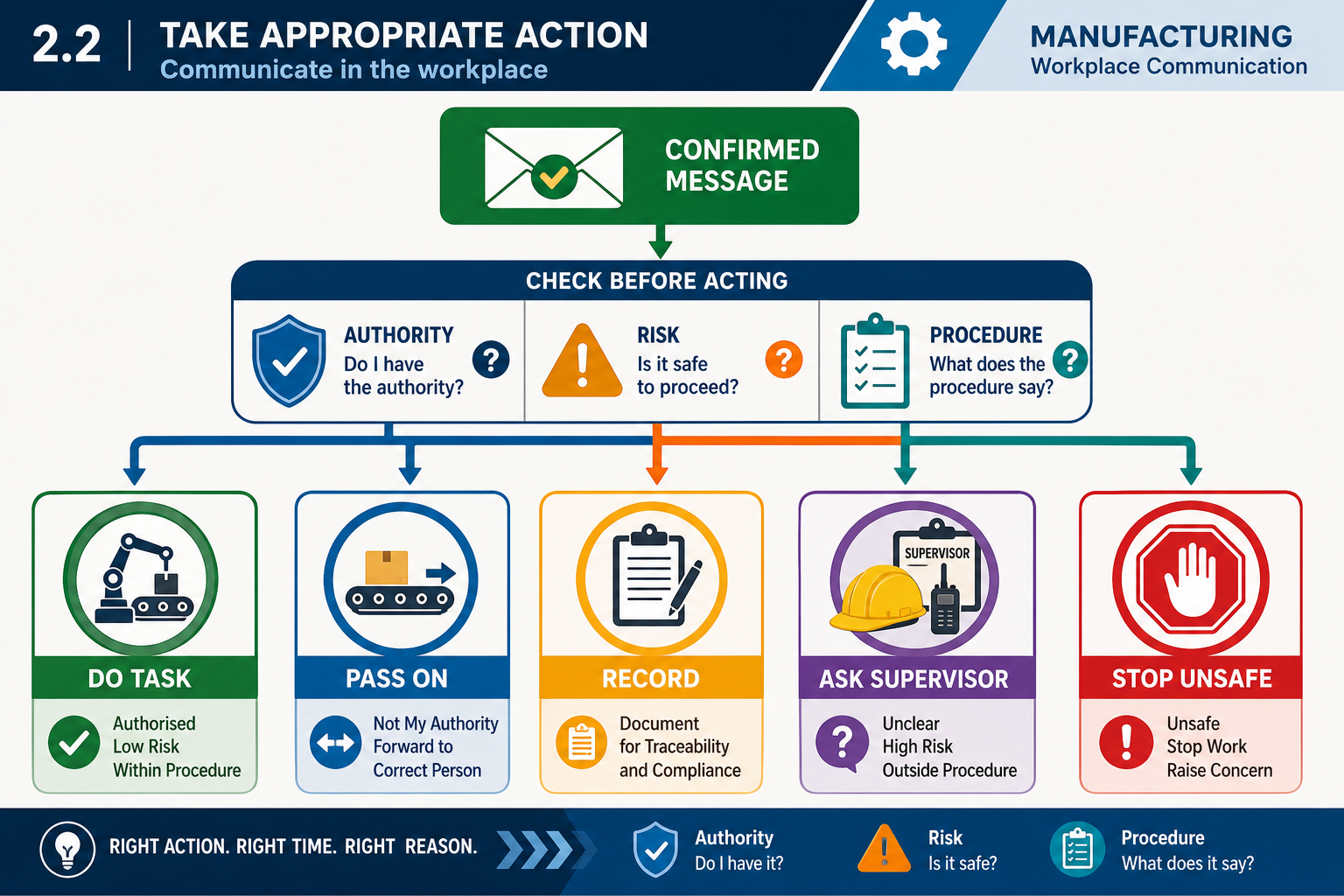
Acting on the message correctly
Once the message is understood, you must take appropriate action. Appropriate means the action matches the instruction, the risk, your role, workplace procedures and your level of authority. It is not enough to be quick; you must be correct and safe.
Start by deciding what type of action is required:
- Do the task if it is within your role, you are trained, controls are in place and the instruction matches the procedure.
- Pass on the message if another person or area needs the information, such as maintenance, quality, stores or the control room.
- Record the information if the workplace requires a written or electronic record, such as a logbook entry, batch sheet, pre-start checklist, permit, defect report or incident notification.
- Stop, isolate or make safe if the message identifies an immediate hazard and you are authorised and trained to take that action.
- Escalate if the task is outside your authority, conflicts with a procedure, involves an uncontrolled hazard or could affect product quality or compliance.
Use workplace documentation as the “single source of truth”. Documentation can include standard operating procedures, safe work method statements where used, WHS procedures, work instructions, permits to work, safety data sheets, production schedules, forms, labels, notices, inspection checklists and shift handover notes. These documents communicate hazards, steps, limits, responsibilities and records. They are important because they reduce reliance on memory and create evidence that work was done correctly.
Example: a supervisor tells you, “Divert the product to holding tank T-105 after the next sample.” You clarify the tank number and sample point. Appropriate action is to check the operating procedure, confirm the valve sequence, ensure you are authorised to make the change, notify the control room if required, complete the diversion, monitor for alarms or leaks, and record the time and batch details on the production sheet.
Common mistakes include acting on half-heard radio messages, using an old printed procedure, relying on colour alone without reading the label, or failing to tell the next shift what changed. If you receive a blue mandatory PPE sign instruction, for example, put on the specified PPE before entering; do not treat the sign as optional. If a yellow warning sign indicates forklifts operating, adjust your route and stay in pedestrian zones.
Appropriate action also includes timing. Urgent safety messages need immediate attention, but routine messages still need to be completed within workplace expectations. If competing instructions arrive, ask your supervisor to confirm the priority.