Week 1 — Elements 1–4
2.3 Respond to communication problems
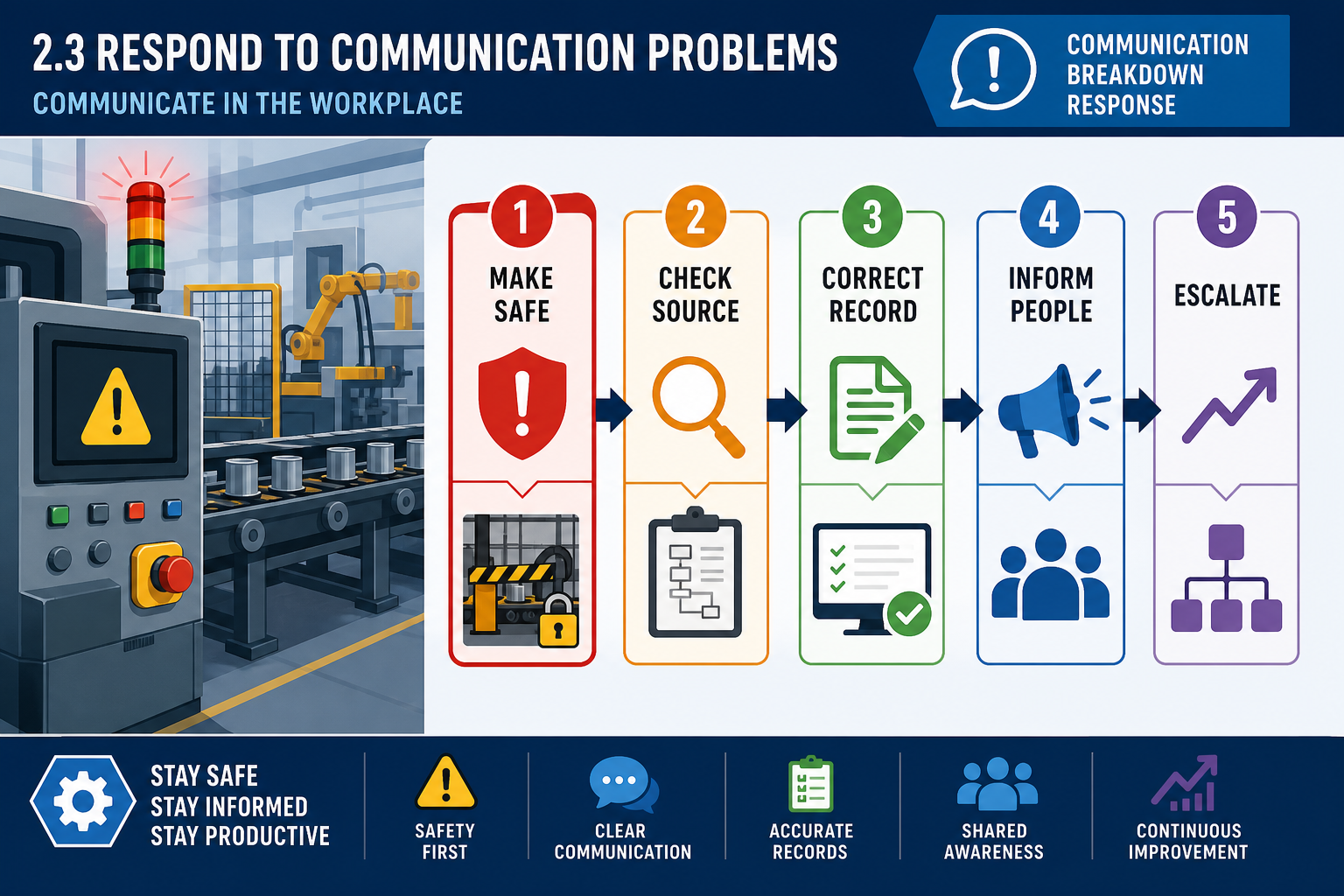
Fixing communication problems
A communication problem occurs when the message is not received, not understood, received by the wrong person, recorded incorrectly, delivered too late or delivered in an unacceptable way. In plant processing, problems can come from noise, shift change pressure, radio dead spots, unclear handwriting, unfamiliar abbreviations, language barriers, assumptions, out-of-date documents or disrespectful behaviour.
Respond early and calmly. Do not let a small misunderstanding become a safety or quality incident. Use this approach:
- Make the situation safe. If the problem could cause harm, stop the task if safe and within authority, warn nearby workers and contact the supervisor or control room.
- State the issue clearly. Use facts, not blame: “The batch sheet says 500 kg, but the work order on the screen says 550 kg.”
- Choose the right method. Use face-to-face discussion for complex or sensitive issues, radio or phone for urgent matters, and email or the workplace system when a written record is needed.
- Check the correct source. Compare the message against the current procedure, work order, permit, label, notice or supervisor instruction.
- Agree on the correction. Confirm who will do what, by when, and who else needs to know.
- Update records if required. Follow workplace rules for correcting documents. Do not erase or hide errors; make corrections traceable according to site procedure.
- Escalate unresolved problems. If the instruction remains unclear, unsafe, discriminatory, aggressive or outside your authority, involve your supervisor.
Acceptable language and tone are part of solving the problem. Swearing at a co-worker, mocking an accent, speaking aggressively, or using sexist, racist or culturally disrespectful language can make the problem worse and may breach workplace policies and anti-discrimination expectations. Be direct but courteous: “I’m not sure we are using the same tank number. Can we check the P&ID or the area board together?”
Example: a new operator follows an old laminated cleaning checklist and misses a newer sanitising step. You notice before production restarts. A good response is to stop the restart process, show the difference between the old checklist and the current controlled procedure, notify the supervisor, complete the missing step if authorised, and remove or report the obsolete checklist. The goal is not to embarrass the operator; it is to restore accurate communication and prevent repeat errors.