Week 1 — Elements 1–4
1.2 Accurately record the message
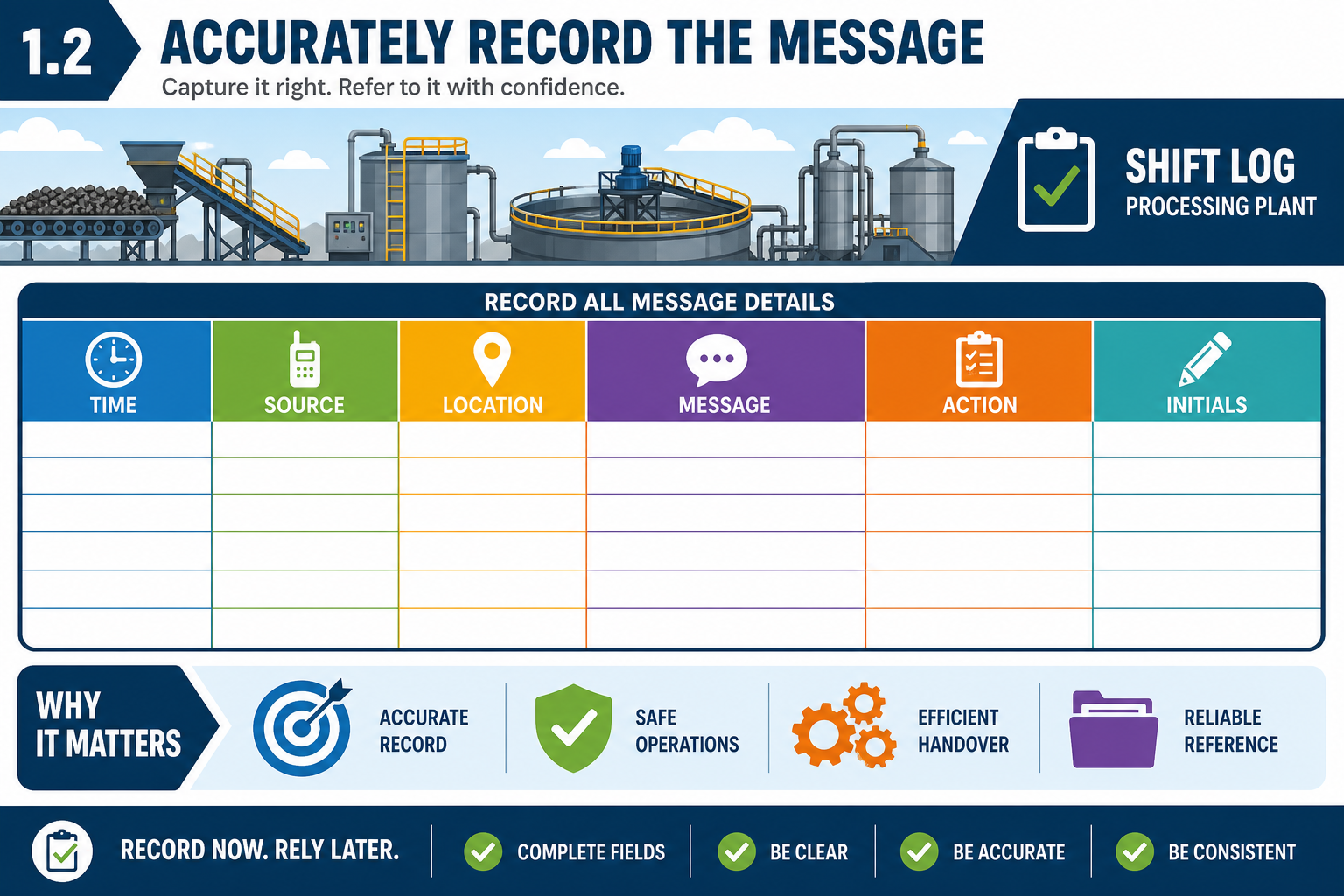
Record the message accurately
Once you have received and confirmed a message, record it in the way your organisation requires. Recording creates a reliable reference for the next person, supports shift handover, and may become evidence that the workplace managed a safety, quality or production issue correctly.
Approved recording methods may include a message pad, shift logbook, maintenance request system, radio log, visitor register, incident or near-miss form, permit record, whiteboard, email, production sheet or electronic system. Use the required source or template rather than inventing your own method. Organisation procedures may specify what must be recorded, who can access it, how long records are kept, and when a verbal message must also be entered into a formal system.
What to record
Record the message as soon as practicable, while details are fresh. Include:
- Date and time received
- Sender’s name, role and contact details if relevant
- Exact location, equipment number, batch, job or area
- Main message or instruction
- Required action and deadline
- Any safety, quality or environmental issue
- Your name or initials as the person who received it
- Whether the message has been relayed or escalated
Use clear, plain language. Write “Forklift oil leak reported near warehouse roller door at 10:15” rather than “problem at warehouse”. Avoid assumptions such as “operator caused leak” unless that was confirmed. If using abbreviations, only use approved workplace abbreviations. In processing plants, similar equipment numbers can cause errors, so check codes carefully: “P-201” is not the same as “P-210”.
For WHS matters, accurate records are especially important. Workplaces keep records of incidents, injuries, near misses, hazards, risk controls and training. These records help show that hazards were reported and managed. If the message is about an incident, follow the incident reporting procedure immediately; do not hide, delay or rewrite details to make them sound better.
Common recording errors include illegible handwriting, missing times, writing only part of the instruction, using personal notebooks that others cannot access, or leaving confidential information on public boards. If you make an error in a paper record, follow procedure—usually draw a single line through it, correct it, and initial it. Do not erase or falsify workplace records.