Week 1 — Elements 1–4
1.1 Receive message and confirm understanding
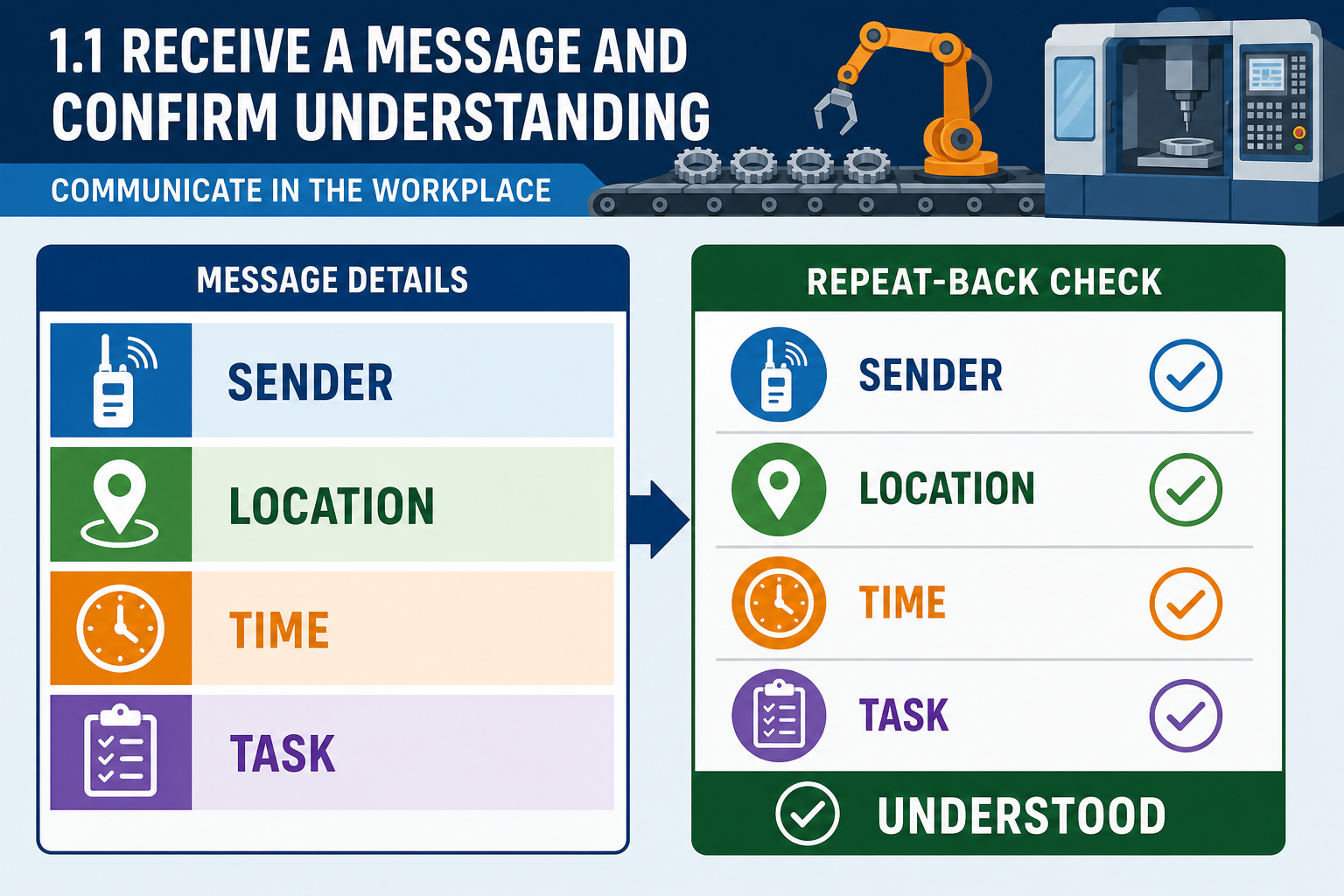
Receive the message properly
A workplace message is information that needs to be understood and usually acted on or passed on. Sources of information include supervisors, operators, maintenance staff, contractors, visitors, delivery drivers, alarms, shift handover notes, emails, noticeboards, production schedules, work permits, safety signs and standard operating procedures.
When receiving a message, first give the sender your attention. In a plant environment, noise, PPE, time pressure and distractions can interfere with communication. Move to a safe place if needed, face the person, listen on the radio without talking over them, or ask the caller to repeat if the line is unclear. Use the communication equipment according to workplace procedure: for example, radio call signs, telephone etiquette, email subject lines, or the correct log-in for a plant system.
Confirm understanding
Confirmation is not just saying “OK”. It means checking that you have decoded the message correctly. Listen for:
- Who is involved or who needs the information
- What has happened or what needs to be done
- Where it applies, such as line, tank, bay, valve or area
- When it happened or when action is required
- Why it matters, especially safety, quality or production impact
Use closed-loop communication: repeat the key details back and ask for confirmation. For example: “Confirming: Line 2 is stopping at 1400 for a belt inspection, and maintenance needs access at the north guard. Is that correct?”
If the message involves risk, do not guess. WHS laws require workers to take reasonable care and follow reasonable safety instructions, and PCBUs must provide information, training and supervision so work can be done safely. If a message mentions a spill, injury, isolation, permit, emergency alarm, missing guard or unsafe condition, clarify immediately and escalate according to procedure.
Common mistakes include nodding without understanding, relying on memory, ignoring unfamiliar plant numbers or abbreviations, and assuming the sender meant a different area. If you are unsure, ask: “Can you spell that name?”, “Which pump number?”, or “Do you mean the red-tagged valve?” Workplace codes, colours and signs also help meaning. For example, red usually indicates prohibition or danger, yellow warns of hazards, blue shows mandatory actions such as PPE, and green identifies emergency or safe condition information.