Week 1 — Elements 1–4
3.1 Acknowledge the request for information and clarify understanding
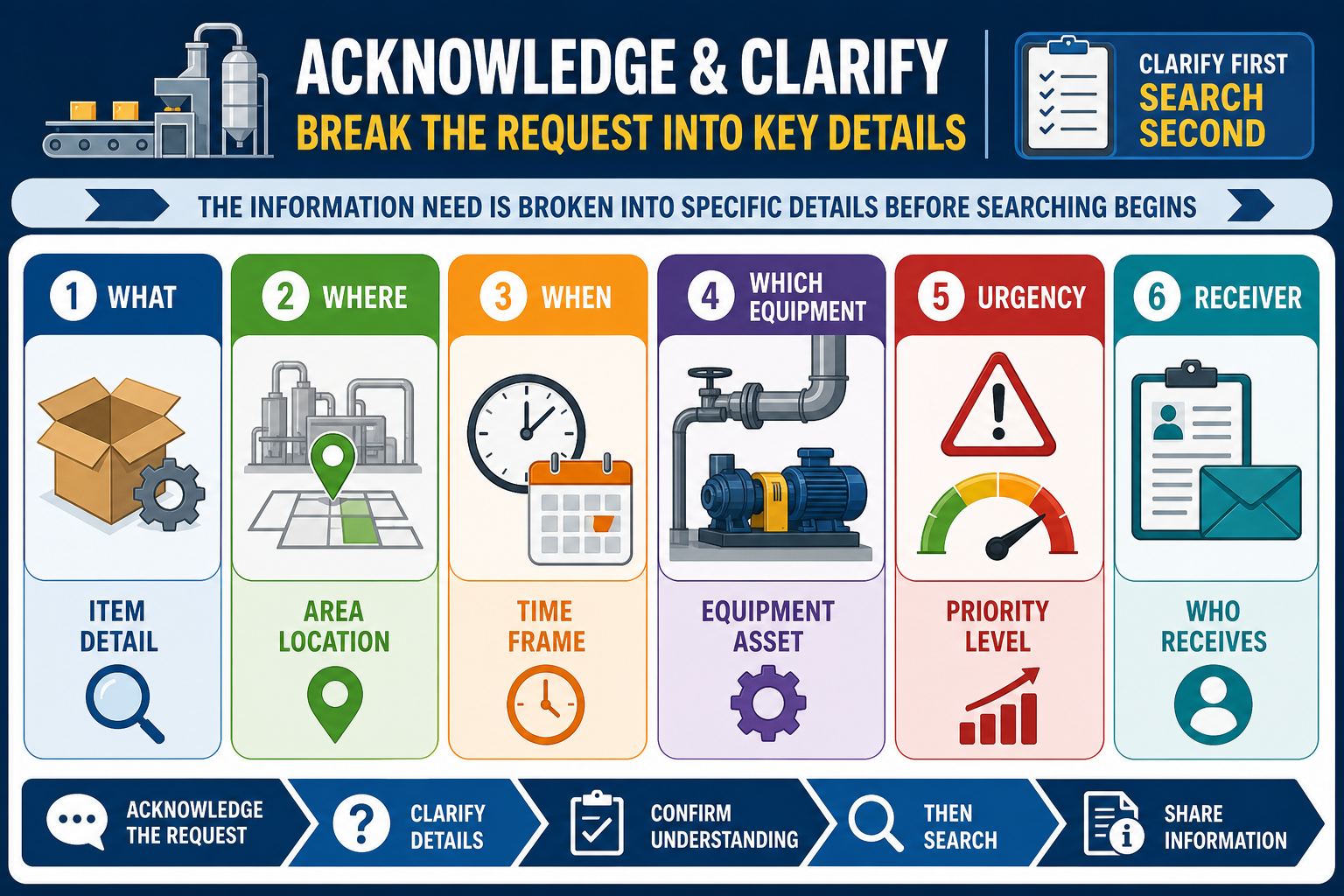
Acknowledge first
To acknowledge a request means you show the person that you have received it and are taking it seriously. This may be a spoken response, a radio reply, a nod followed by a verbal check, or a short email reply. In a plant, do this promptly because the request may affect production, quality or safety.
A useful response is: “I’ve got your request. You need the cleaning record for Tank 4 from night shift, is that right?” This is better than saying “yes” and walking away, because it checks the exact information needed.
Clarify the request
Clarifying means confirming:
- what information is needed, such as a batch number, isolation status, delivery time or procedure step
- why it is needed, if that affects urgency or detail
- which timeframe, area or equipment it relates to
- who needs the answer and by when
- whether the request is routine, confidential, urgent or safety-related
Use open questions first, then closed questions to confirm. For example: “Which line are you asking about?” followed by “So you need the Line 2 metal detector check result for 10 am, correct?”
Communicating across differences
People from culturally and linguistically diverse (CALD) backgrounds may speak English as an additional language, use different workplace terms, or be less comfortable challenging a statement. Noise, PPE, radios and shift pressure can make this harder. Good strategies include speaking clearly, using plain English, avoiding slang, pointing to labels or documents, using approved signs and symbols, and asking the person to repeat back key details. Do not pretend to understand because you feel embarrassed.
Common problems and corrective actions
If the request is unclear, ask again before acting. If two people give different instructions, stop and confirm with your supervisor or the authorised person. If the request sounds unsafe, outside your role, or may involve confidential information, escalate it. Under Australian WHS laws, workers must take reasonable care and follow reasonable safety instructions, so clarifying safety-related information is part of working safely.
Example: Maintenance asks over the radio, “Is the pump ready?” You clarify: “Do you mean Pump P-204 in the caustic area, and are you asking whether it is isolated and tagged?” This prevents the wrong pump being treated as safe.