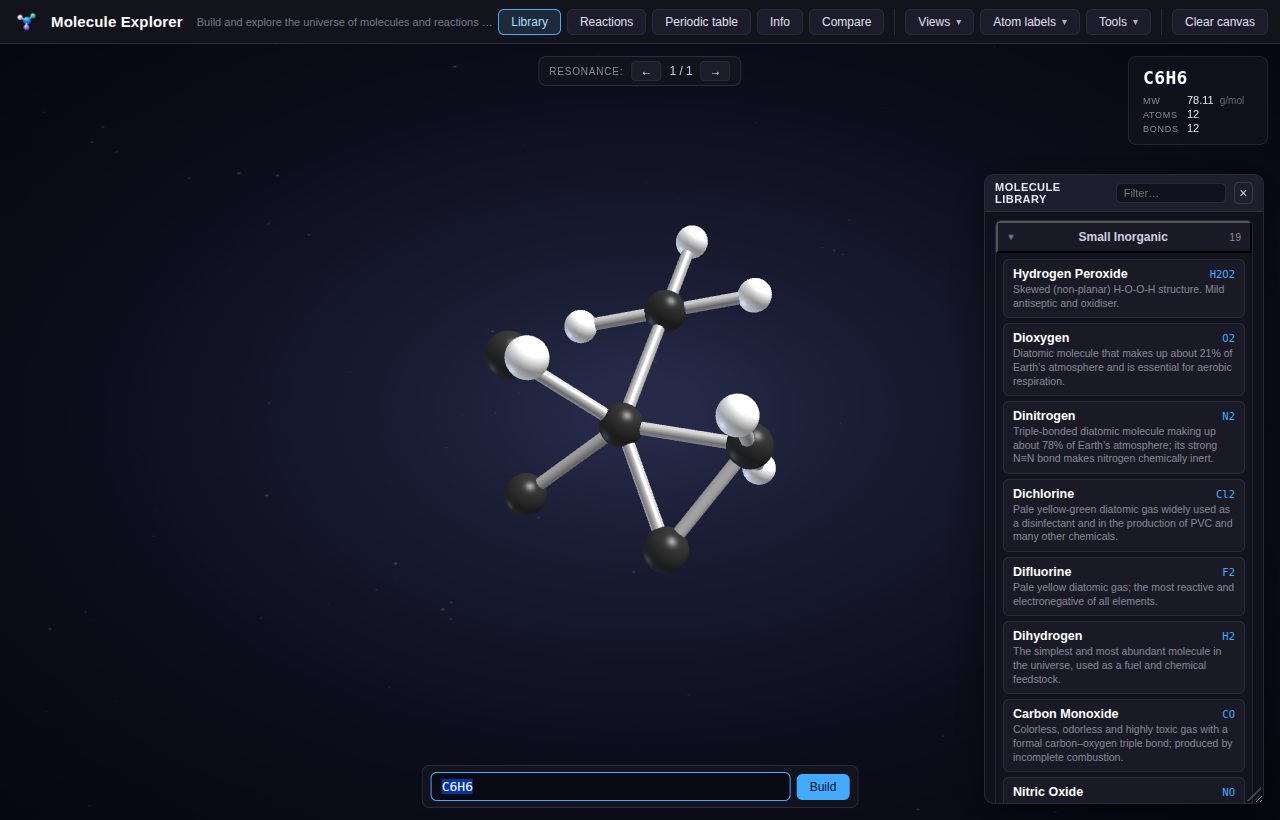
Molecule Explorer
Build molecules atom by atom, explore 200+ from the library, and play animated reactions with energy diagrams, VSEPR geometry and resonance.
Custom interactive learning · Built end-to-end
Simulations, virtual labs, compliance courseware and the systems that deliver them — custom-built for your subject and your learners. One person doing both the instructional design and the development, so nothing gets lost in the handover between them.
The service
Every project starts from your subject, your learners and what they're finding hard — and ends with a finished learning product built for exactly that. Everything in the portfolio below was made this way.
A working, browser-based simulation for your subject — the kind of thing learners can actually manipulate, break and retry. Runs on any modern browser with no installs and no logins.
See nine of them running →Complete units built against training.gov.au requirements — learning content, assessment tools, mapping matrices and the evidence trail needed to stand up to an audit.
Meet the VET Course Creator →Custom plugins and components, course builds and structure, SCORM and gradebook integration, and migration between platforms without losing the learning design.
See the platforms I've built →Content generation and quality-checking workflows built around your standards — including private and local models for content that can't leave the building.
How the pipeline works →Power Automate, Power Apps and API work that takes the repetitive administration off your team and connects the systems that should have been talking to each other.
Tell me what's eating the time →How it works
It's a fair question, and the honest answer is that I've spent as long building the production pipeline as the products themselves — a reusable 3D engine, AI-assisted content generation, and an automated packaging and quality-check chain. That's why a custom build is measured in weeks rather than the six to twelve months a studio would quote.
A short conversation about the learning outcome, who the learners are, and what "done" looks like. You get a clear written scope and an honest estimate before any work starts.
Something running in your browser within days — not a storyboard, not a slide deck. You react to the real thing while it's still cheap to change direction.
The pipeline handles the heavy lifting — 3D scaffolding, content generation, assessment authoring, accessibility and packaging. I do the design judgement it can't.
Delivered as SCORM, a restorable Moodle course, or a standalone web app you host yourself. Everything runs in a plain browser, so it outlives whatever platform you're on today.
Every AI-assisted step is reviewed by a human who knows the subject before it reaches a learner. The pipeline makes the work fast — it doesn't get to decide what's correct.
Where the pipeline goes furthest — for RTOs, TAFEs & VET teams
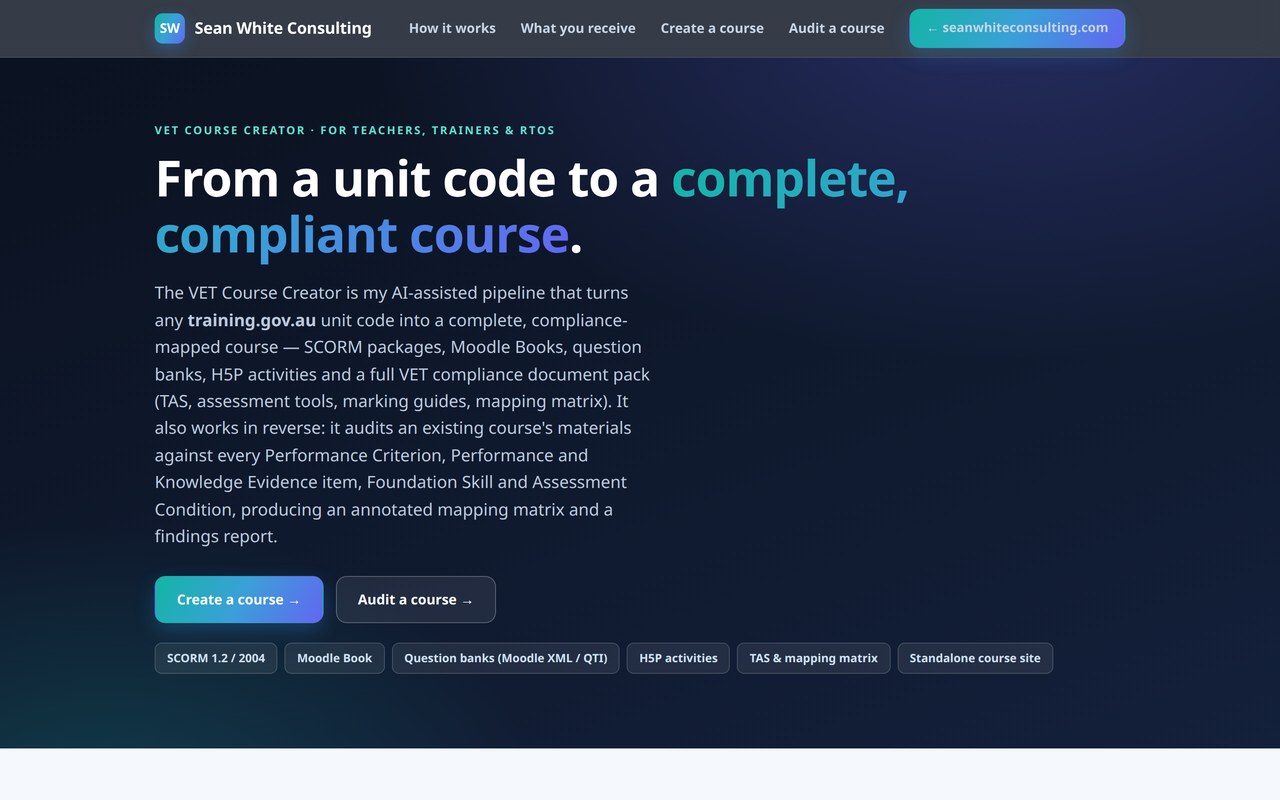
Give it a training.gov.au unit of competency and it builds everything needed to deliver and assess that unit — learning content, assessments and the compliance evidence to back them. Or give it a qualification code: the core units load and lock, you pick electives against a live count of what the packaging rules require, and every unit in the program gets built. It also works in reverse: upload existing materials and it audits them against every requirement of the unit.
Live now — for RTOs, universities, and independent trainers & coaches
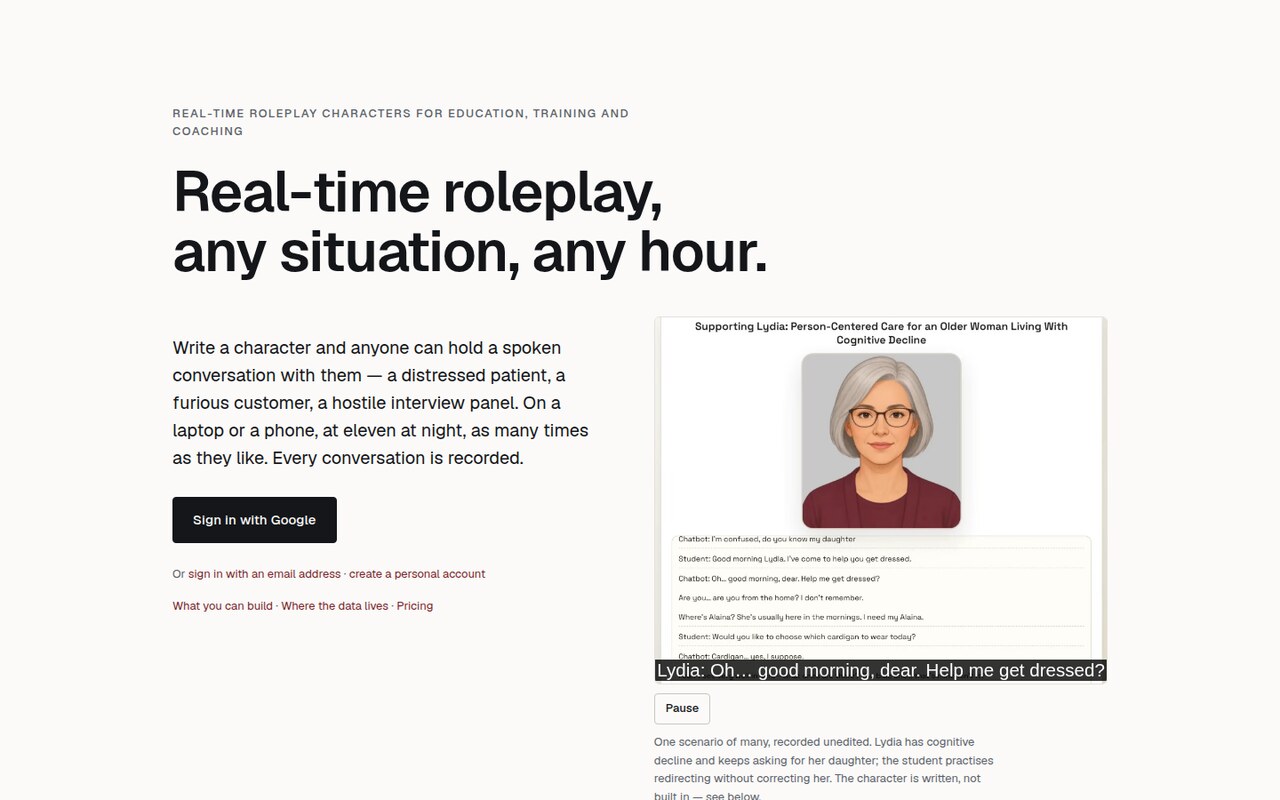
Write a character and anyone can hold a spoken conversation with them — a distressed patient, a furious customer, a hostile interview panel. On a laptop or a phone, at eleven at night, as many times as they like. Every conversation is recorded.
Portfolio
Each of these was built from scratch for a different subject, using exactly the process above. They're here so you can see what a finished product actually looks like — open any of them and use it.
Build molecules atom by atom, explore 200+ from the library, and play animated reactions with energy diagrams, VSEPR geometry and resonance.
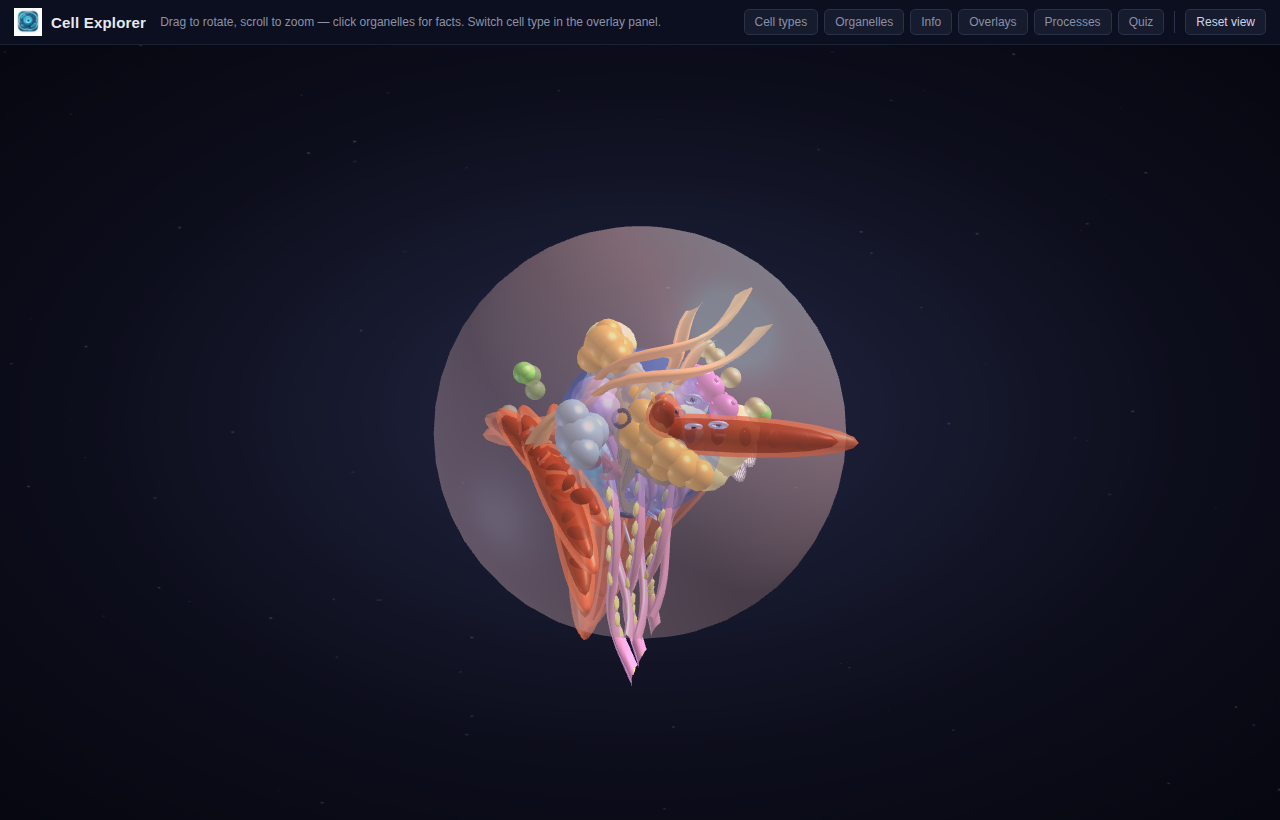
Explore animal, plant, bacterial and other cell types in 3D — click any organelle, cut away the membrane, and play animated cellular processes.
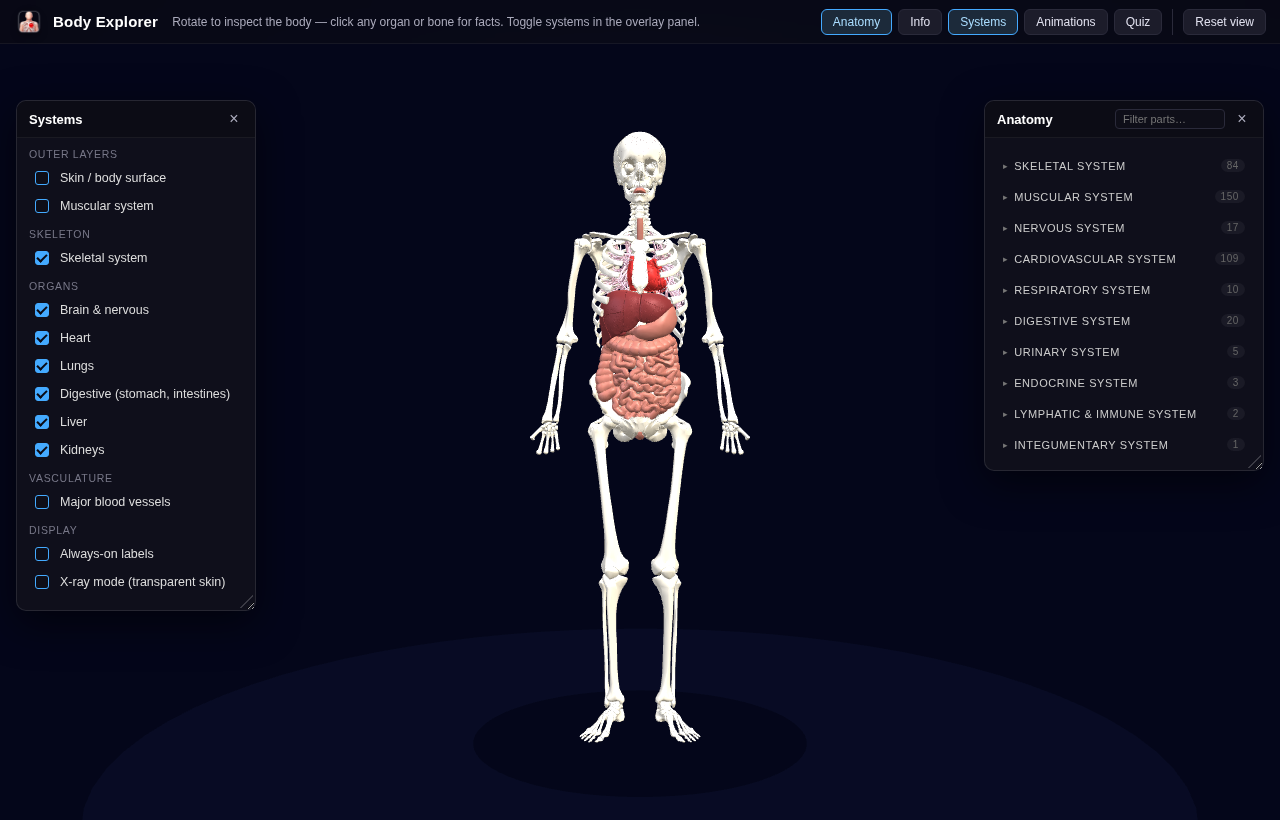
Toggle skeleton, muscles, organs and blood vessels, switch on X-ray mode, and play physiological animations on a full 3D human body.
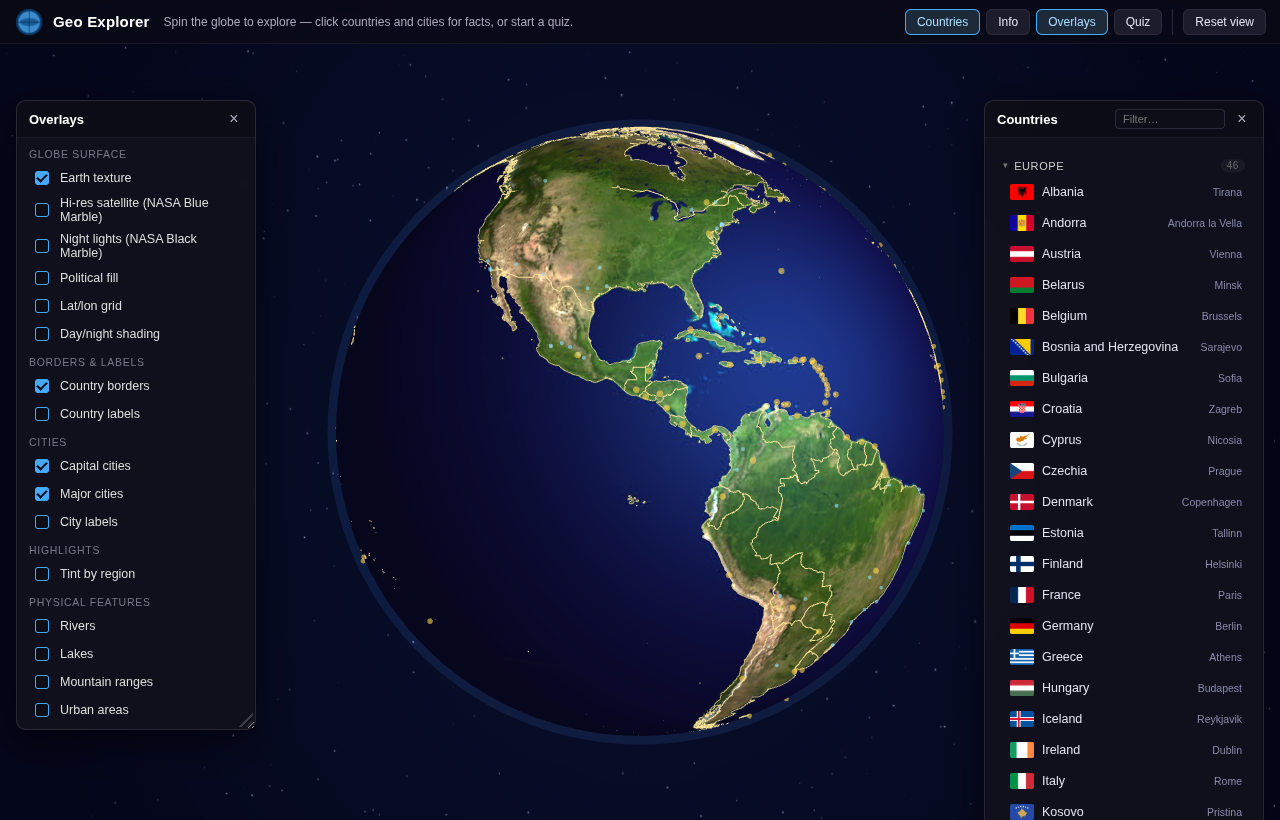
Spin the Earth through a deep stack of overlays — borders, cities, physical geography, geology, time zones, UNESCO sites, undersea cables and day/night.
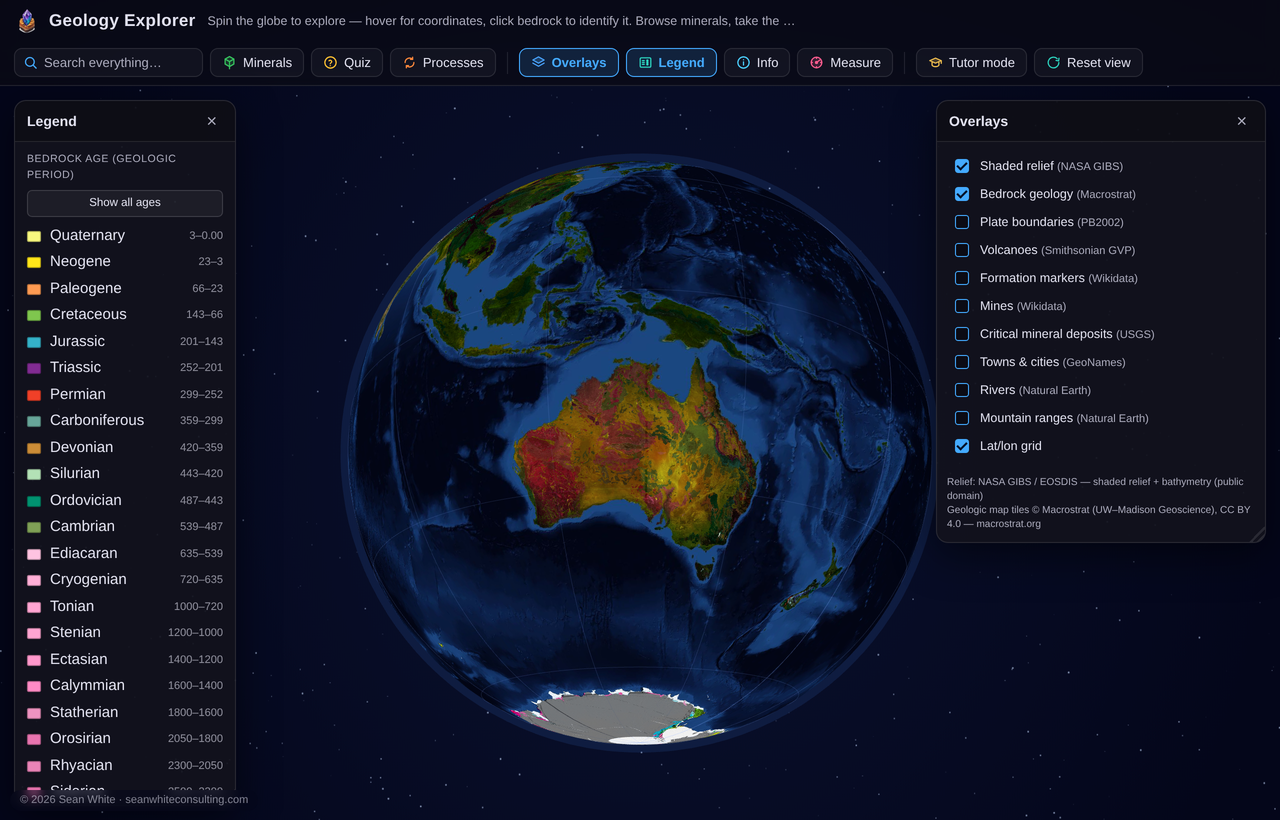
Every geologic period mapped on a 3D globe, with plate boundaries, volcanoes and mines, a searchable mineral library and narrated process videos.
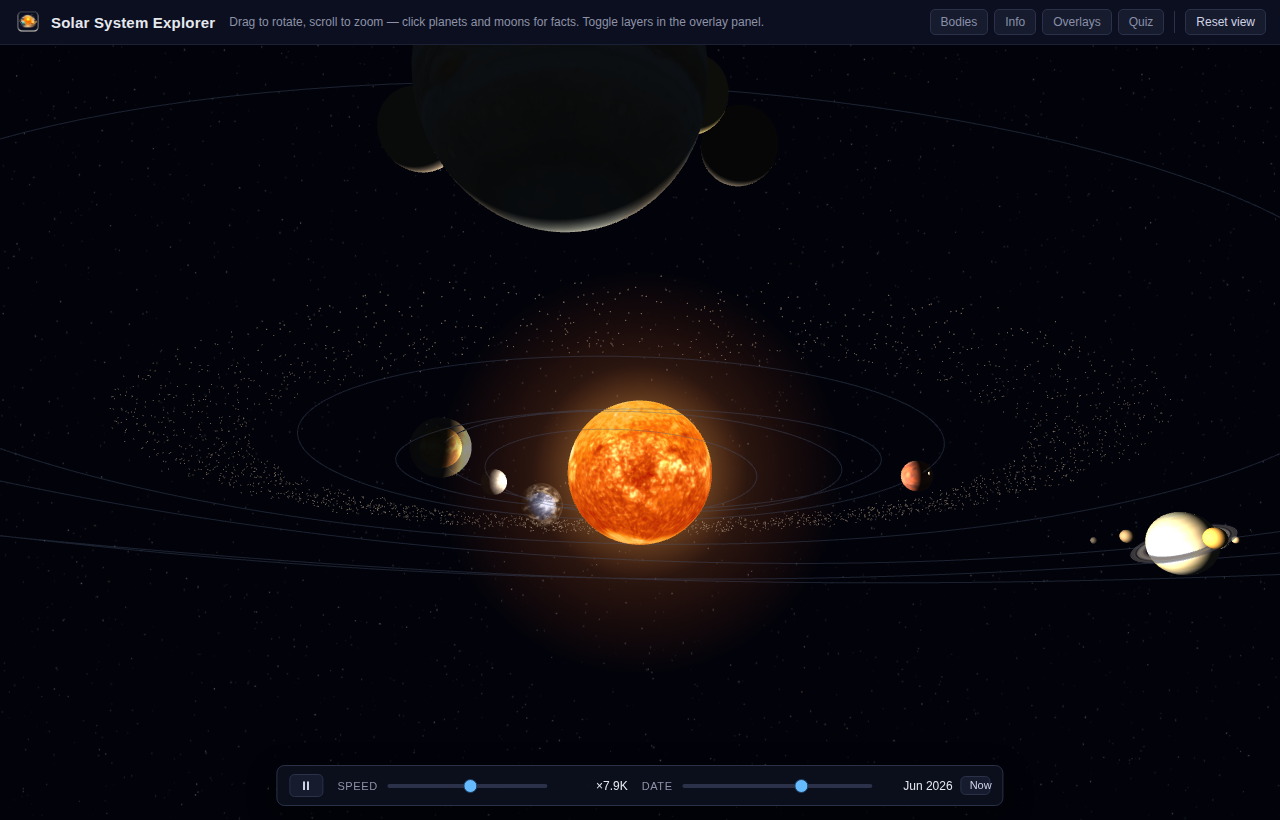
Fly through the Sun, eight planets, dozens of moons and the Kuiper belt — click any body for facts and surface features, and watch the orbits run.
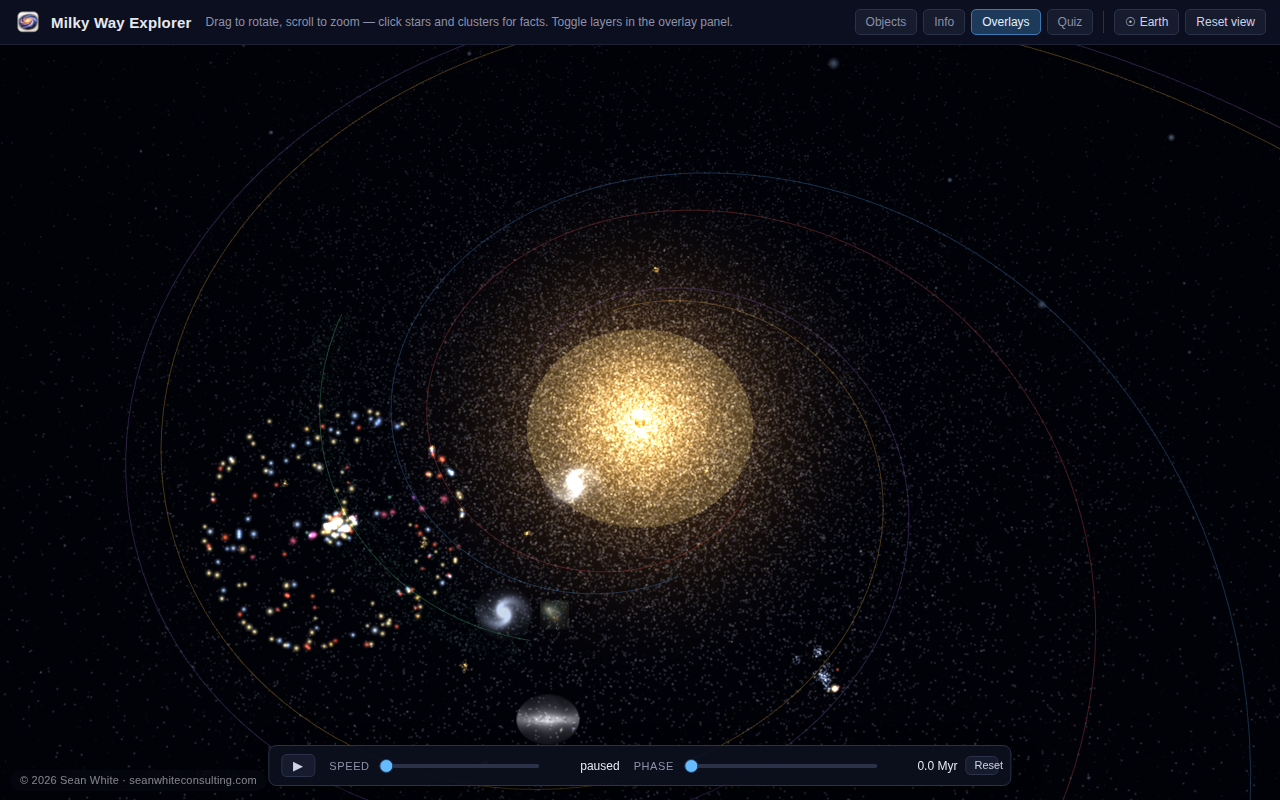
Fly around the galaxy's spiral arms, bulge and halo — stars, nebulae, clusters, satellite galaxies and constellations, all clickable.
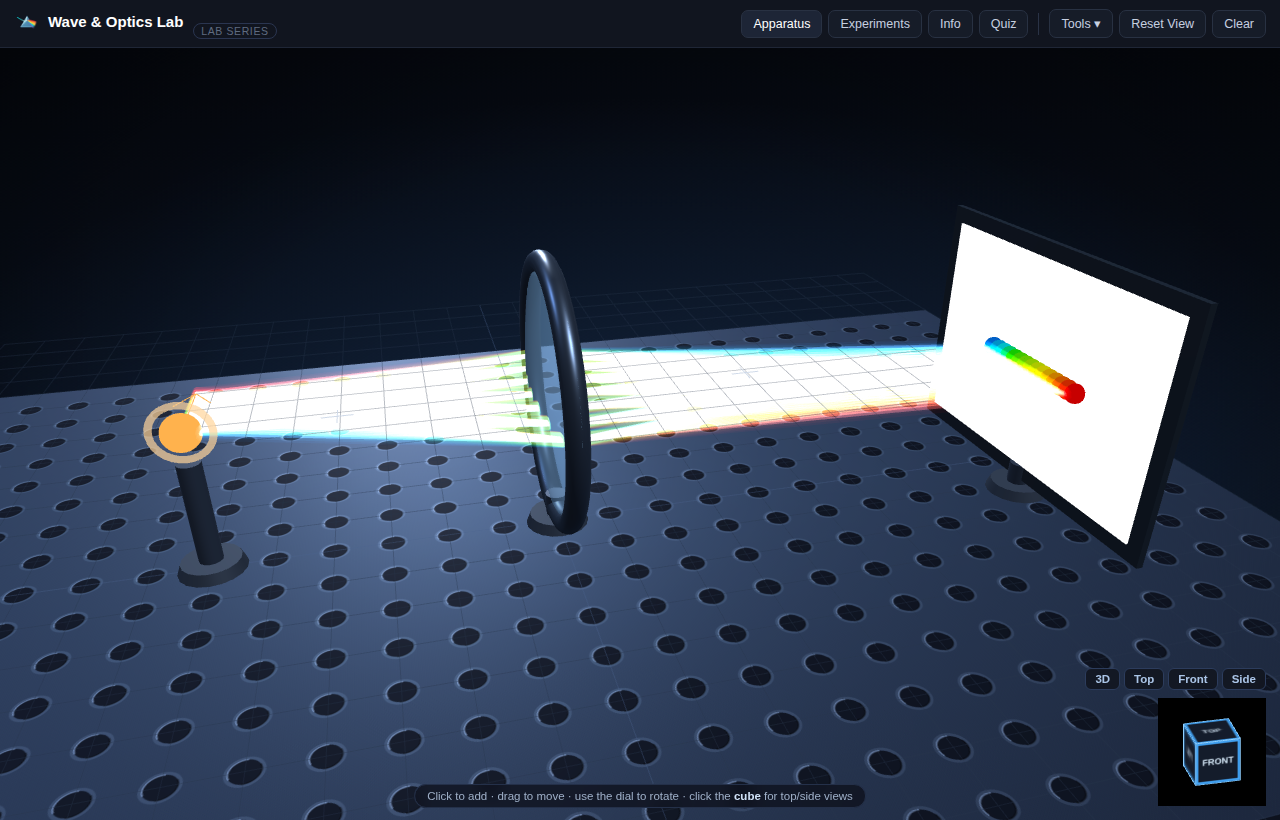
Place lasers, lenses, mirrors, prisms and gratings on an optical bench while a live ray tracer bends, disperses and interferes the light in real time.
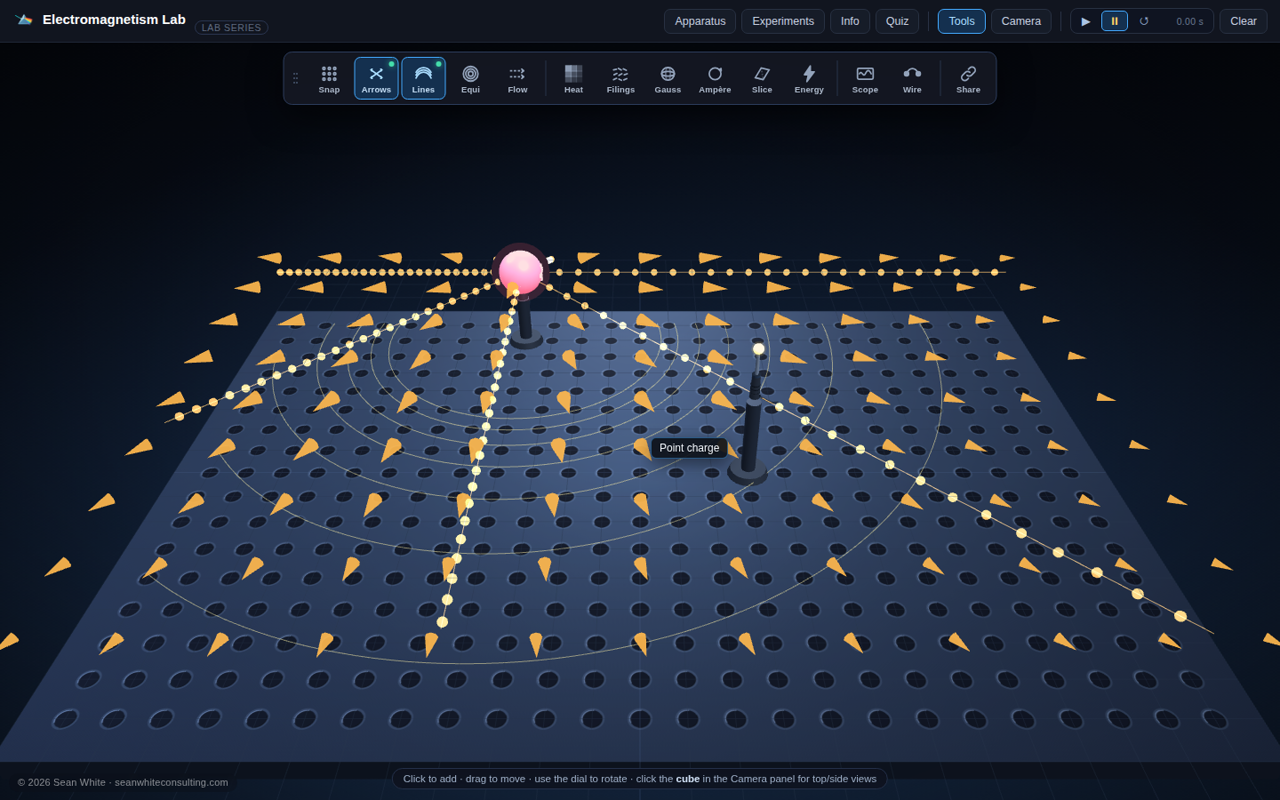
Place charges, magnets, coils and circuits and a live engine draws the fields, equipotentials and the paths of charged particles moving through them.
Your subject isn't in this list — which is rather the point. Tell me what needs building →
Also mine
Alongside client work I develop and maintain my own software. It's where most of the pipeline above came from, and it's why a custom build takes weeks rather than a year.
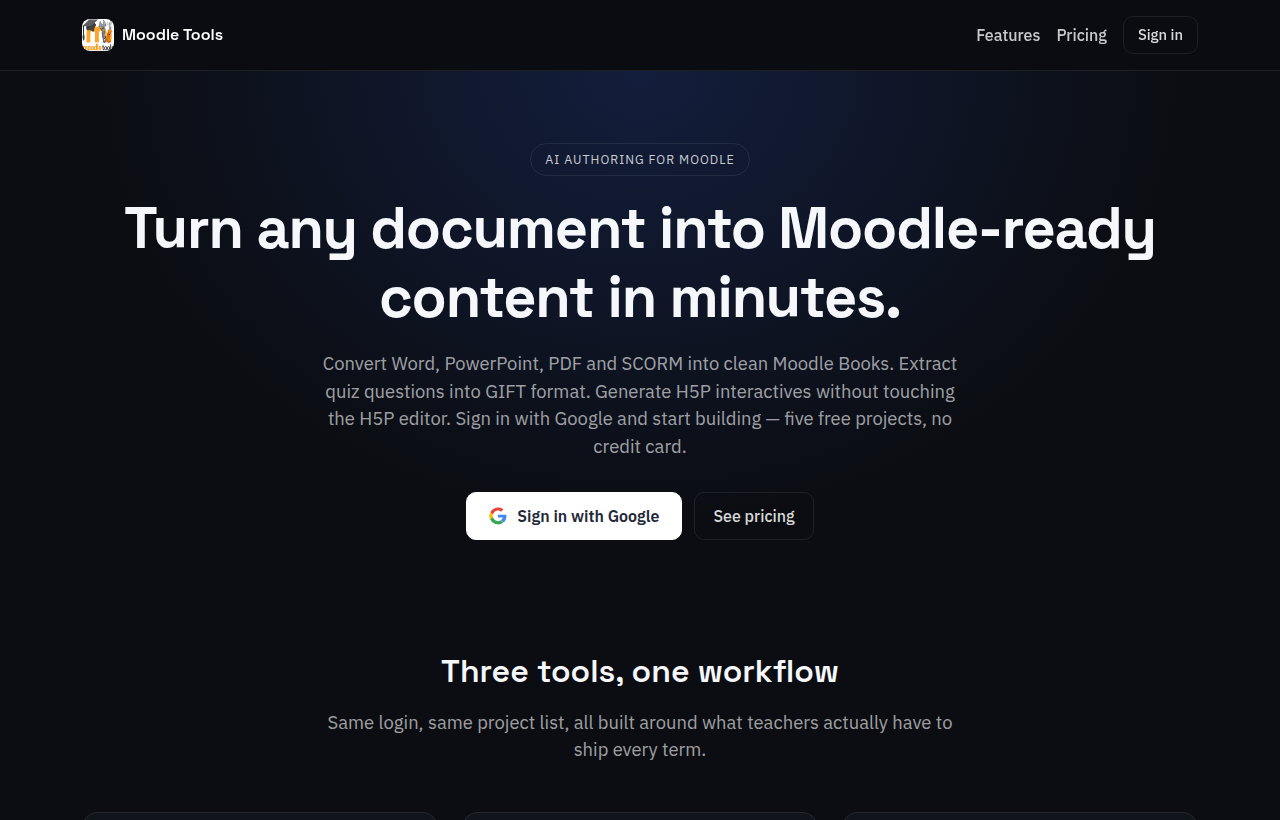
An AI-assisted platform for developing and editing learning content, built for educators and working across the major language models — including private and local ones.
moodletools.com →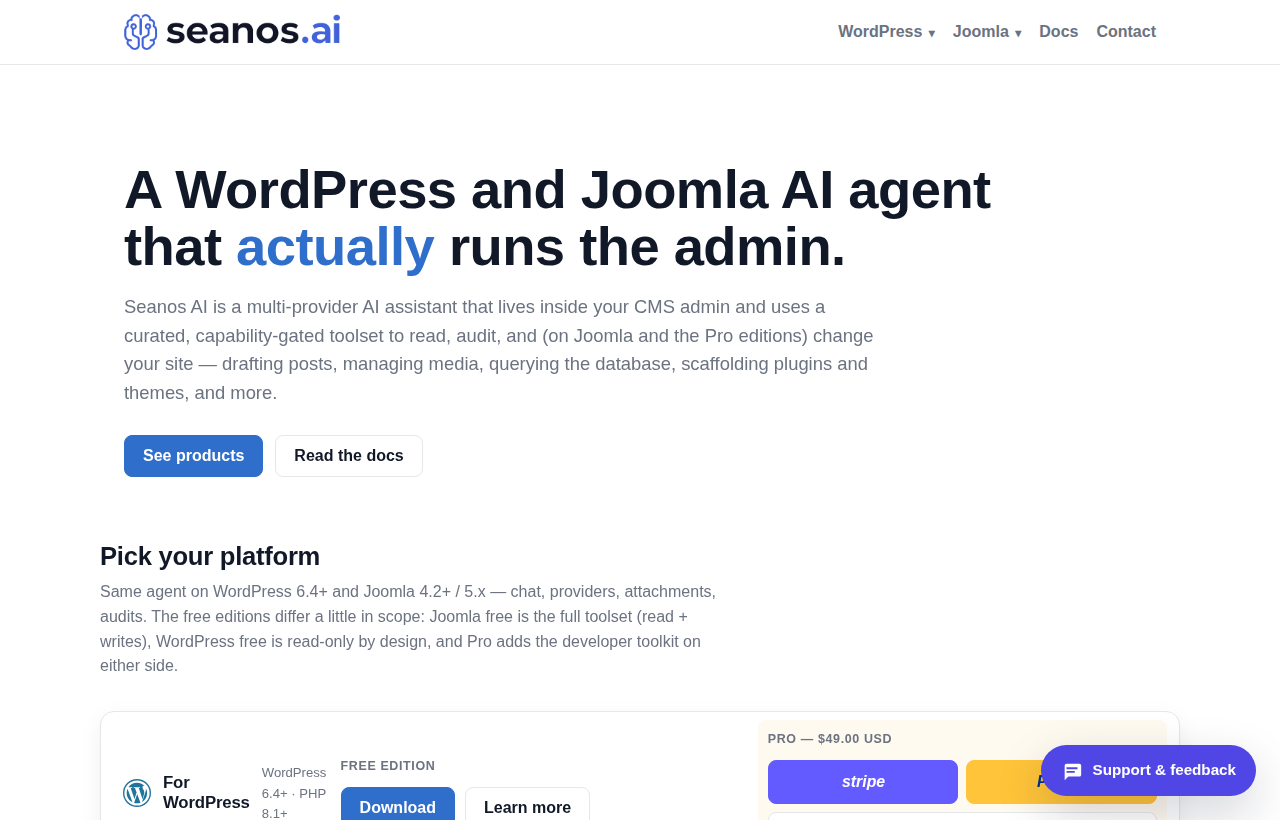
An AI assistant that works inside the WordPress and Joomla admin — it reads your site to answer questions, and every change it proposes is yours to approve before anything goes live.
seanos.ai →About
Most people in this field are either a learning designer who briefs a developer, or a developer who builds what they're told. I've spent long enough doing both to know how much gets lost in that handover — and that removing it is the single biggest reason these projects land.
My recent focus is applying AI to course content: designing and building the tooling that generates, structures and quality-checks learning materials at scale, including in privacy-sensitive environments where data can't leave the building.
I'm based in Mackay, Australia and work remotely with universities and training providers across the country.
Start a project
A subject, a problem, or just a rough idea of what your learners are struggling with — that's enough to start. I'll come back with an honest view of whether I'm the right person for it and what it would take.